Una seduzione misteriosa affidata alla materia pittorica. Quello che ho trovato e quello che cercavo a Miart 2026.
Quest’anno non ci volevo proprio andare. Troppa confusione, troppi stimoli fugaci, troppo di tutto in una settimana per me già dedicata a portare avanti progetti in corso. Eppure pensavo alla fiera internazionale, tra le italiane quella che conosco meglio e che riesco sempre ad apprezzare nella sua ricchezza. La tentazione di quel troppo era forte e sapevo che i miei desideri di conoscere artisti nuovi in un solo pomeriggio sarebbe stata saziata, a patto di fuggire non appena avessi capito in quale direzione mi avrebbe portato l’occhio. Perdersi per le scoperte: nella nuova location è ancora più facile, affermazione per me più che positiva visto il desiderio di lasciare all’istinto le mie scelte.
In due ore mi hanno trovato loro, ricerche o opere a me finora sconosciute. E tutto il resto mi sembrava non più necessario.
Che oggi si possa parlare di qualcosa di davvero nuovo è arduo a dirsi. In fondo l’idea di novità non è già di per sé forzata, manipolata, sfruttata a sproposito, e dunque non così interessante? Almeno in un mondo che dovrebbe smuovere emozioni e non conformarsi a ciò che subisce imposte definizioni di “contemporaneo”. Una seduzione è sempre genuina quando lascia una scia di interrogativi, che tocca argomenti universalmente e profondamente umani, dunque senza tempo. Alcune immagini restano impresse nella natura indefinita di una seduzione subita alla vista di una semplice complessità, evidente ma non del tutto spiegabile, nata da qualcosa che pur vivendo nel presente affonda nel ricordo o nella proiezione di un vissuto.
Una seduzione misteriosa si dipana tra il soggetto e la sua origine, nella costituzione di una forma concettualmente mobile, instabile tra realtà e soggettività. Se ciò che è surreale esplora il confine tra verosimile e immaginario, in tal senso posso considerare la visione delle tre ricerche artistiche di cui lascio testimonianza, finora sconosciute.
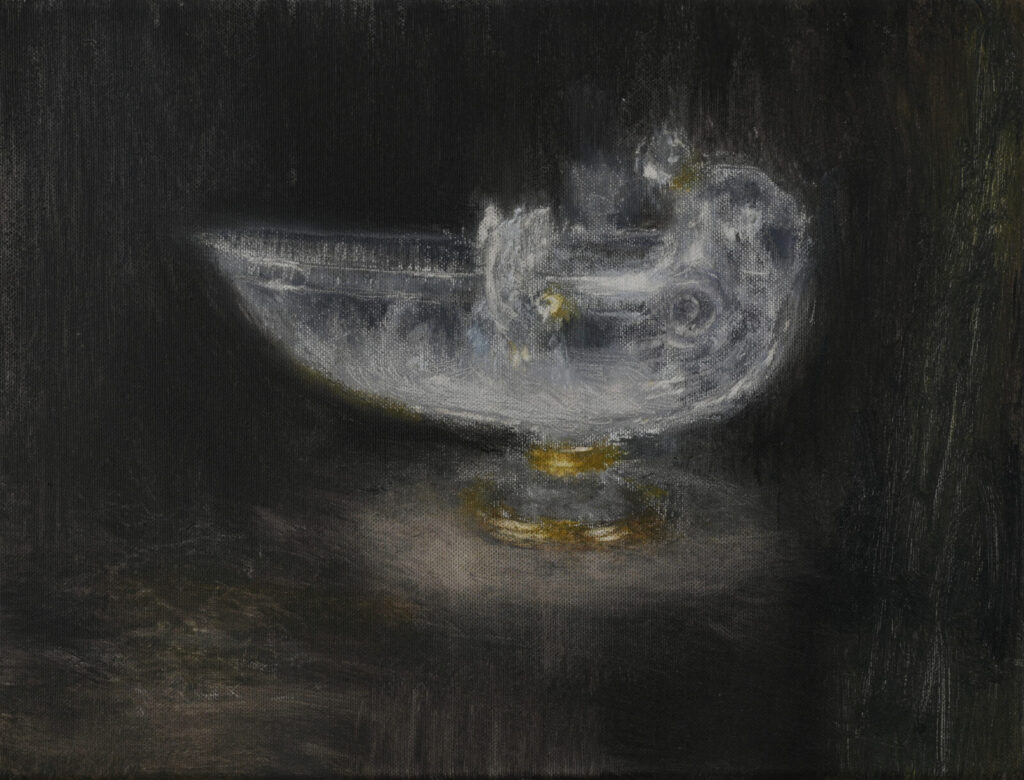
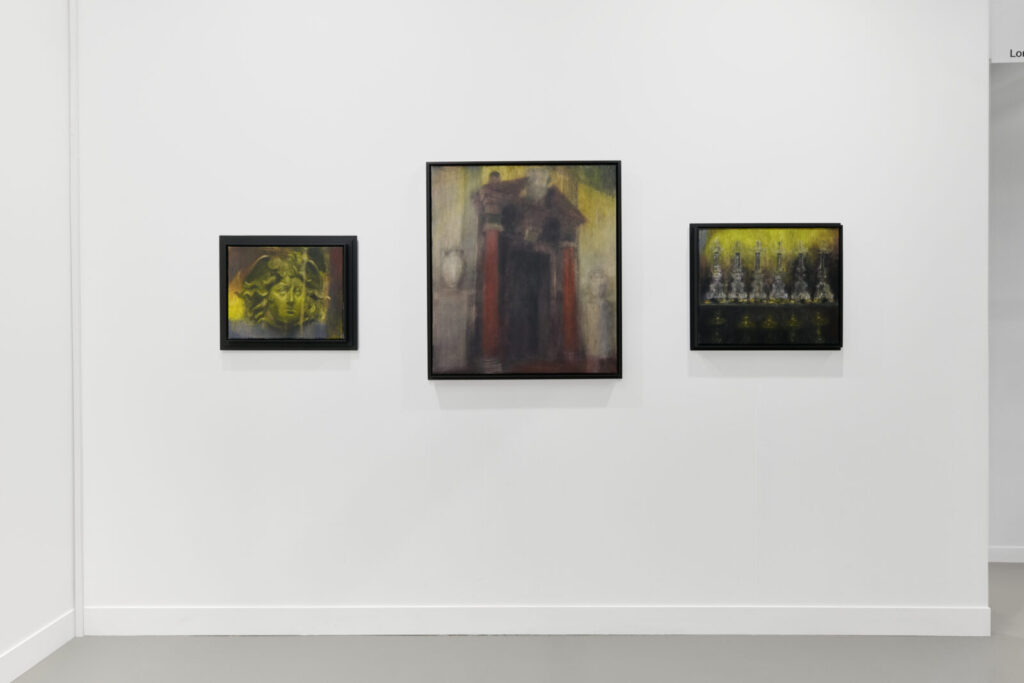
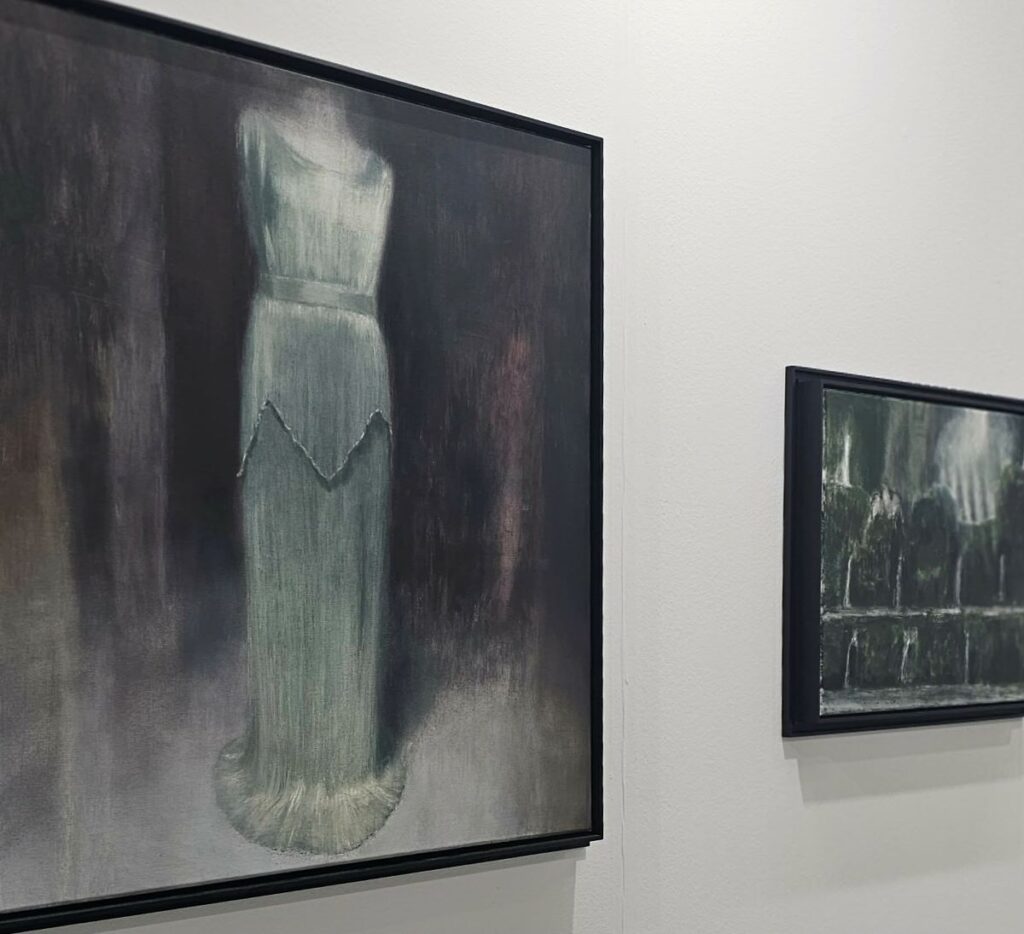
Non fa mistero di oggetti e luoghi reali, visti nel corso di viaggi, il pittore polacco Łucasz Stoklosa. Li dichiara semplicemente nei titoli delle opere presentate a Miart da Krupa Gallery.
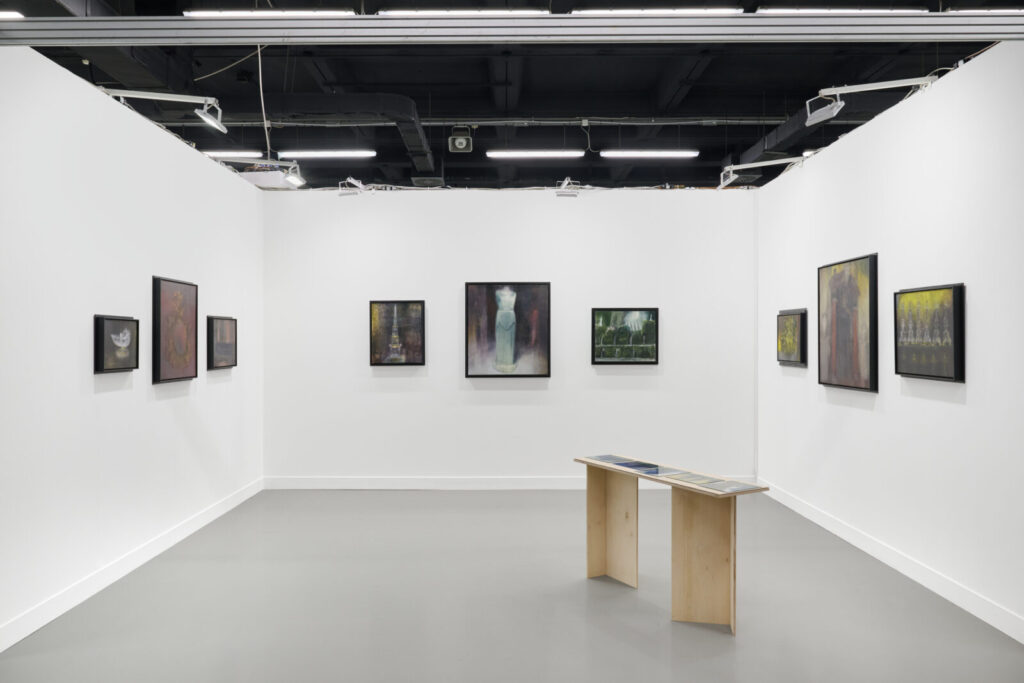
Che sia un abito disegnato da Mariano Fortuny o che siano gli effetti d’acqua del giardino terrazzato di Villa d’Este a Tivoli è l’impressione impressa nel ricordo a restituirne le sembianze permeate di nostalgia, e di oscura bellezza. E’ dal modo in cui la pittura isola i soggetti contro ad uno sfondo sfuggente, nella modulazione e nella sfocatura di toni che siamo se-dotti, condotti altrove, verso un luogo di confine tra l’apparire e lo smaterializzarsi di una visione, qualcosa che suggerisce un frammento di un processo di cui non si indovina l’esito.
Sarà per questa sospensione temporale e di senso, che davanti ai dipinti di Stoklosa ci sentiamo inclusi in un senso di mistero inebriante, colpiti da quei “baluardi della memoria, simboli di simboli, rappresentazioni di rappresentazioni”, come scrive Giovanna Manzotti nel testo per Krupa Gallery. Potremmo aver incontrato quell’immagine in questa vita, e averla perduta, oppure vederla per la prima volta ma senza poterla fermare: tra la superficie ovattata e un bagliore sinistro, pare destinata ad una trasfigurazione nel buio. Guardare è riconoscere un mondo sconosciuto, è trovarsi sospesi tra la tensione dell’esistenza e la liberazione dell’enigma.
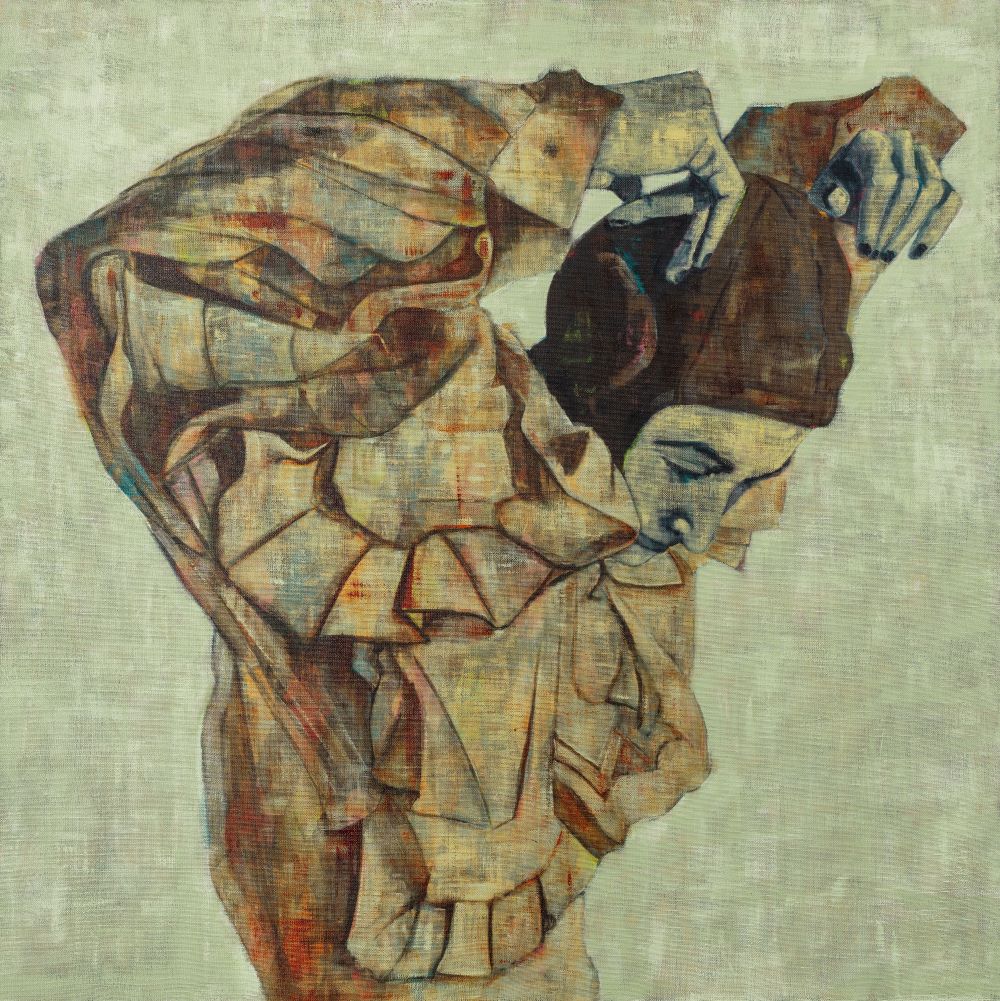
Un diverso linguaggio visionario, non privo di ironia in veste di provocatore di coscienze, è quello di Sara Berman.
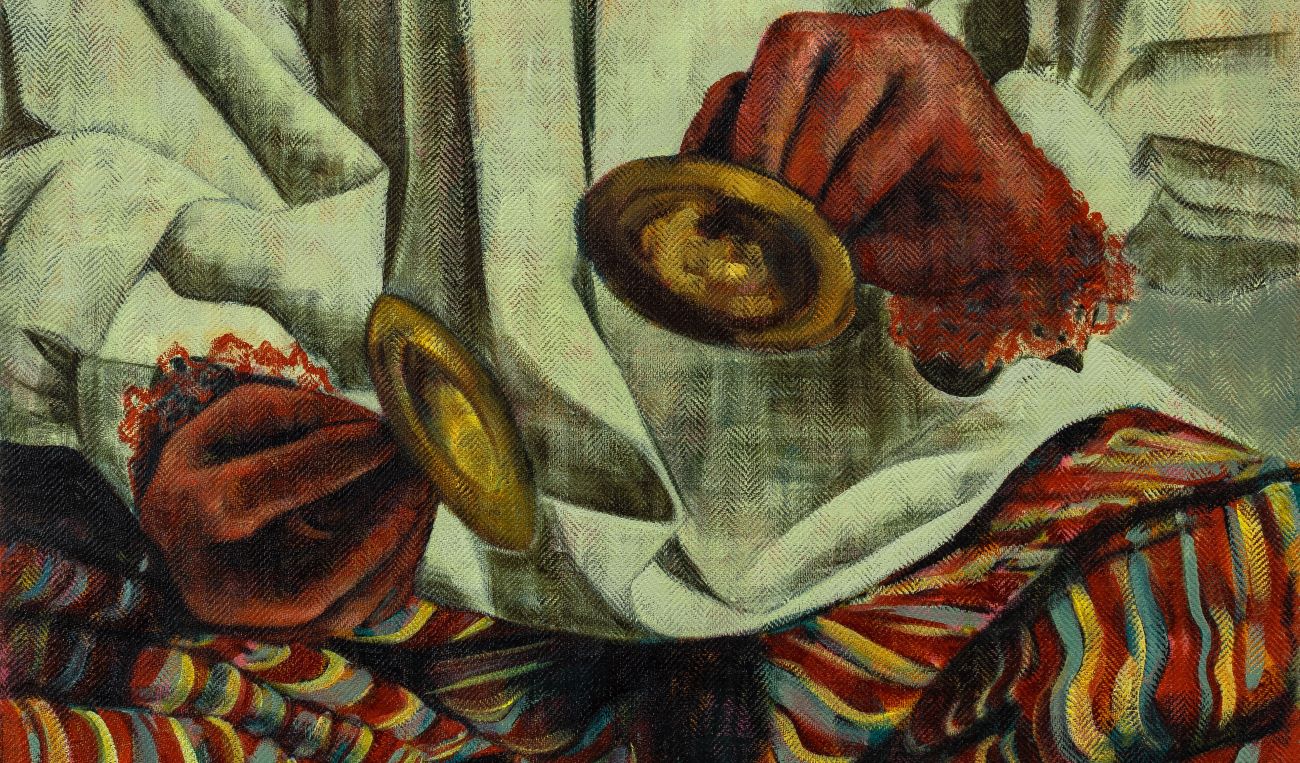
La galleria Mimmo Scognamiglio ha trasferito a Miart una selezione della personale Circus, con dipinti e disegni realizzati per l’occasione. L’attenzione dell’artista per i costumi dei suoi personaggi proviene dall’ esperienza nel settore della moda, da cui si distacca concettualmente. Il ruolo della bellezza femminile usato dal male gaze, assume nelle composizioni pittoriche una forza opposta: gli autoritratti di Berman, singolarmente e nell’insieme, raccontano attimi di una performance circense, una recitazione al femminile mediante la figura beffarda di Arlecchino. Furfante o prostituta, la donna di Berman trascende nel gioco una feroce critica sociale; supera nel molteplice la personale identità dell’artista, nella teatralità di un patto infranto. I personaggi sono sempre la stessa persona, eppure migrano goni volta verso diverse personalità: la Domatrice, il Clown, l’Aviatrice, la Scimmia Danzante.
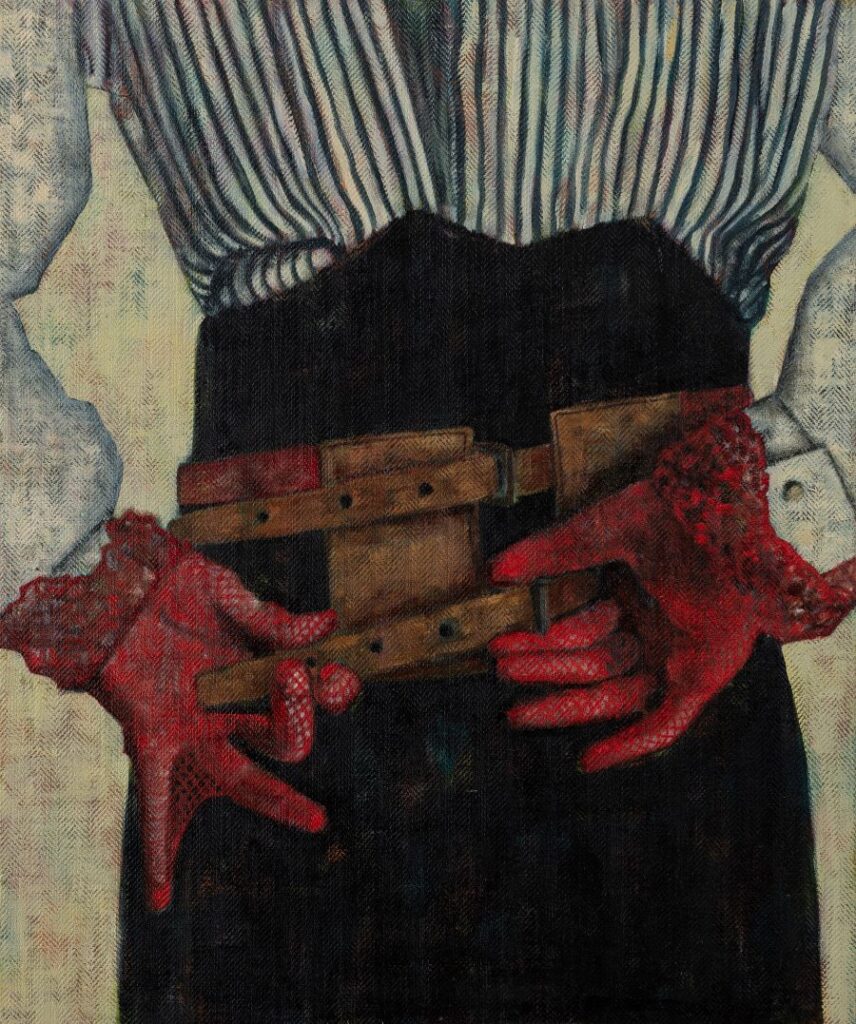
Del Circo che ha tanto ispirato gli artisti del Novecento, si conserva quell’aura malinconica di un universo marginale e fantasioso fuori del senso comune, con quell’allegria che cela e rivela umane oscurità.
Una seduzione misteriosa fa avvicinare l’osservatore allo sguardo di chi si ribella alla consuetudine, ma che vive senza forzature in una materialità delicata. Con la grazia ambigua dei gesti, ad esempio una mano potrebbe slacciare come allacciare una cintura, con una pennellata pulita in un universo tonale che vive in comunione con la texture stratificata del supporto, la sfacciataggine di un’identità ritrovata nella possibilità di non restringersi in una una sola definizione, autofiction che interpreta il proprio femminile, attuato anche attraverso l’esaltazione della pratica d’arte, nella sostanza pittorica e segnica.
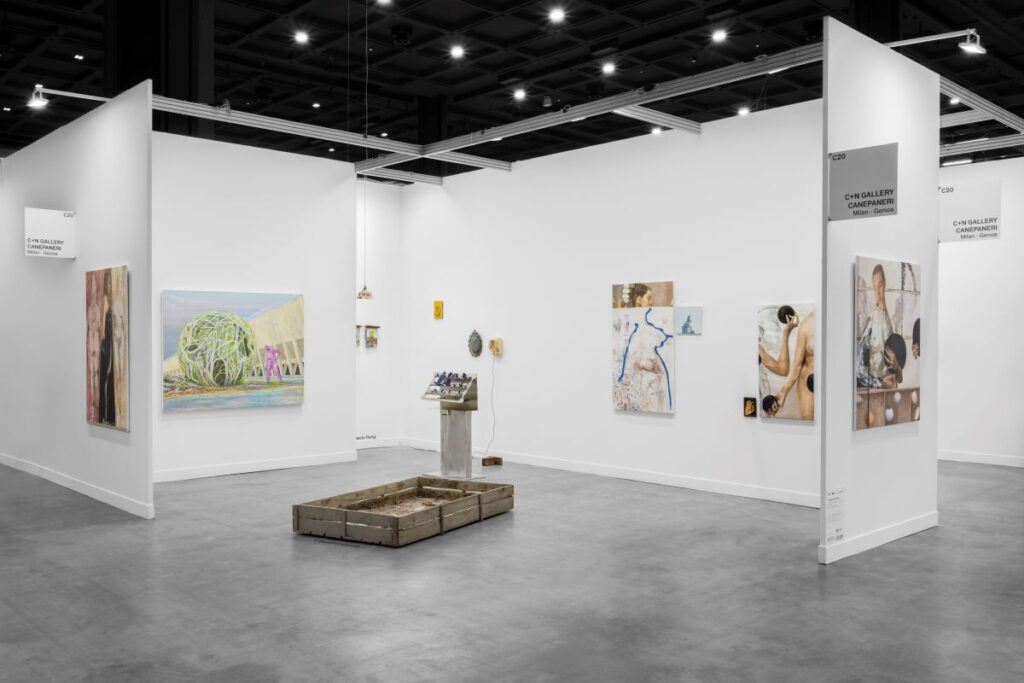
In una modalità più analitica si manifesta il mistero identitario di Deng Shiqing, artista cinese operante a New York. E’ presentata da C+N Gallery CANEPANERI in una sezione speciale dello stand, che ospita anche Claudio Costa, Ginevra Petrozzi, Peng Shuai Paolo e Taisia Korotkova.
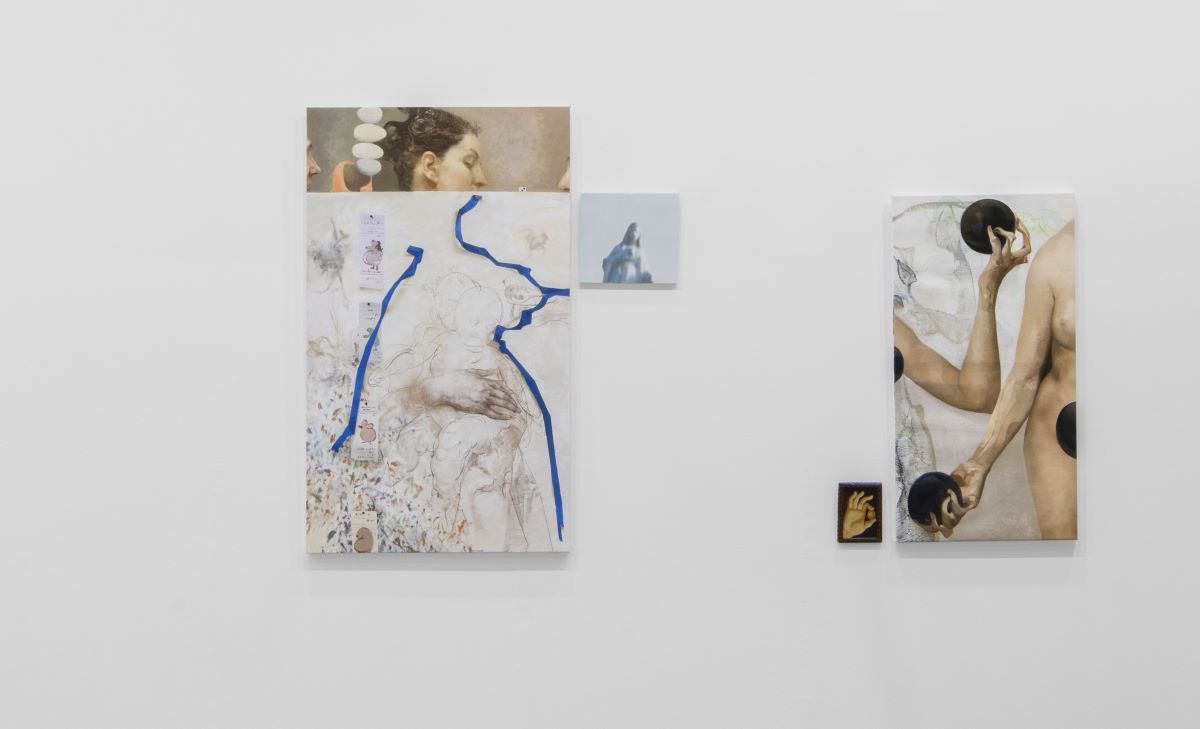
Incontro la ricerca di Shiqing nuovamente dopo averla scoperta ad Arte Fiera Bologna: allora come ora colpisce come la sua perizia disciplinare sappia declinarsi in diversi registri stilistici all’interno della stessa immagine, come la figura venga scomposta o riprodotta nella citazione di altre figure, spesso desunte dalla storia dell’arte e osservata dal soggetto principale, oppure abitata dal segno grafico. Un mondo dentro ad altri mondi la cui pittura gioca un ruolo narrativo e di giocosa esplorazione simbolica. Tridimensionale e piatto convergono in una seduzione misteriosa affidata all’ombra e alla superficie, nel territorio del surreale più ironico con punte di combinazione all’assurdo, toccando però temi profondamente concreti.
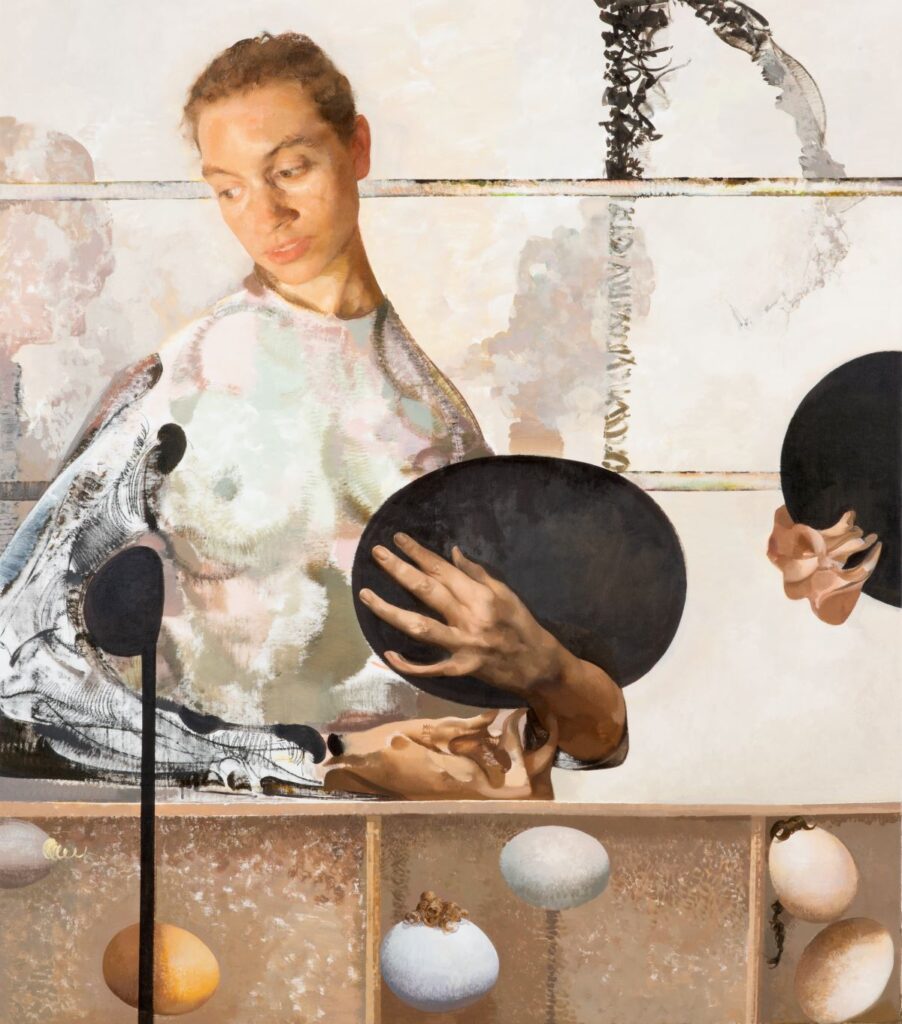
Gli argomenti trattati sono spesso esplicitati dalla presenza ripetuta di forme tramandate come simbolo: in dipinti che affrontano la tematica della nascita e della maternità surrogata a fare il suo molteplice ingresso è l’Uovo. Rappresentato realisticamente o suggerito da una nera campitura piatta, persino rotto e sgocciolante di una sostanza a volte incoerente, non più custodita dal guscio, sembra sempre comunicare con il corpo femminile, a cui universalmente e pittoricamente si associa l’espansione del discorso verso la continuità della vita. Campeggia sulla parte esterna dello stand Prelude of birth, forse l’opera che maggiormente catalizza una seduzione misteriosa e interrogativa.
Altre espressioni d’arte mi hanno colpito, ma questo sembra essere l’anno della pittura, ed esco ancora una volta da una manifestazione così multiforme con una visione sul mondo rinnovata dalla fascinazione per il pennello intriso di colore.
Per conoscere le prossime mostre degli artisti con le gallerie che li rappresentano, vi invito a consultare i link: https://krupagallery.com/artist/lukasz-stoklosa/ https://mimmoscognamiglio.com/artists/44-sara-berman/ https://www.canepaneri.com/it/news-653/deng-shiqing
Michela Ongaretti
ENGLISH VERSION
A mysterious seduction entrusted to pictorial matter. Three discoveries at Miart 2026
A mysterious seduction entrusted to pictorial matter. What I found and what I was looking for at Miart 2026.
This year, I really didn’t want to go. Too much confusion, too many fleeting stimuli, too much of everything in a week already dedicated to pushing forward ongoing projects. And yet, I kept thinking about the international fair—among the Italian ones, the one I know best and always appreciate for its richness. The temptation of that “too much” was strong; I knew that my desire to discover new artists in a single afternoon would be satiated, provided I fled as soon as I understood in which direction my eye would lead me. Getting lost in discovery: it’s even easier in the new location—a more than positive thing for me, given my desire to let instinct guide my choices.
In just two hours, they found me: research and works I never knew existed. And suddenly, everything else felt unnecessary.
To claim that one can speak of something truly “new” is difficult. After all, isn’t the very idea of novelty already forced, manipulated, and exploited inappropriately, and therefore not that interesting? At least in a world that should stir emotions rather than conform to imposed definitions of the “contemporary”. A seduction is always genuine when it leaves a trail of questions, touching upon subjects that are universally and deeply human, and thus timeless. Certain images remain imprinted in the undefined nature of a seduction experienced at the sight of a simple complexity—evident yet not entirely explainable—born from something that, while living in the present, sinks into memory or the projection of a lived experience.
A mysterious seduction unravels between the subject and its origin, forming a conceptually mobile shape that wavers between reality and subjectivity. Since the surreal explores the threshold between the real and the imagined, I view the three artistic paths I’ve shared here in much the same way.
The Polish painter Łucasz Stoklosa makes no secret of the real objects and places seen during his travels; he simply declares them in the titles of the works presented at Miart by Krupa Gallery.
Whether it is a dress designed by Mariano Fortuny or the water effects of the terraced garden of Villa d’Este in Tivoli, it is the impression imprinted in memory that restores their appearance, permeated with nostalgia and dark beauty. It is through the way the painting isolates the subjects against an elusive background, in the modulation and blurring of tones, that we are se-duced, led elsewhere, toward a borderland between the appearance and the dematerialization of a vision; something that suggests a fragment of a process whose outcome remains unguessed.
Perhaps it is due to this suspension of time and meaning that, before Stoklosa’s paintings, we feel included in a sense of intoxicating mystery, struck by those “bulwarks of memory, symbols of symbols, representations of representations,” as Giovanna Manzotti aptly puts it in the text for Krupa Gallery. We might have encountered that image in this life and lost it, or perhaps we see it for the first time without being able to hold it; between the muffled surface and a sinister glow, it seems destined for a transfiguration into the darkness. To look is to recognize an unknown world; it is to find oneself suspended between the tension of existence and the liberation of the enigma.
A different visionary language, not devoid of irony acting as a provocateur of conscience, is that of Sara Berman.
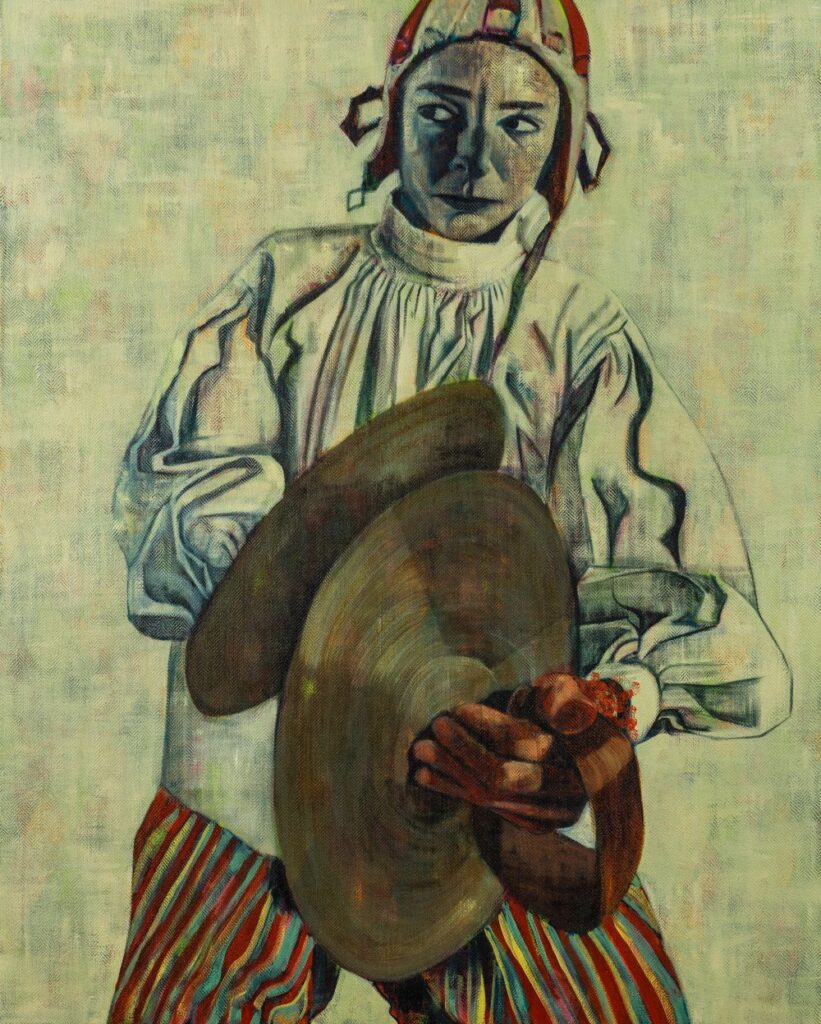
Mimmo Scognamiglio Gallery brought a selection from the solo exhibition Circus to Miart, featuring paintings and drawings created for the occasion. The artist’s attention to her characters’ costumes stems from her experience in the fashion industry, from which she conceptually detaches herself. The role of female beauty used by the male gaze assumes an opposite force in these pictorial compositions. Individually and collectively, Berman’s self-portraits capture flashes of a circus act, a feminine performance channeled through the mischievous character of Harlequin. Whether rogue or prostitute, Berman’s woman transcends fierce social criticism through play; she moves beyond the artist’s personal identity into multiplicity, within the theatricality of a broken pact. The characters are always the same person, yet each time they migrate toward different personalities: the Tamer, the Clown, the Aviatrix, the Dancing Monkey.
From the Circus that so deeply inspired twentieth-century artists, there remains that melancholy aura of a marginal, imaginative universe beyond common sense—with a cheerfulness that both conceals and reveals human darkness.
A mysterious seduction draws the observer toward the gaze of one who rebels against convention, yet lives effortlessly within a delicate materiality. Through the ambiguous grace of gestures—where a hand might just as easily be unbuckling as buckling a belt—and a clean brushstroke within a tonal universe that exists in communion with the layered texture of the medium, emerges the boldness of an identity found in the refusal to be confined to a single definition. It is an autofiction interpreting its own femininity, brought to life through the exaltation of artistic practice, in both its pictorial substance and its gestural mark-making.
The mystery of identity manifests in a more analytical mode in the work of Deng Shiqing, a Chinese artist based in New York.Her work is showcased by C+N Gallery CANEPANERI within a dedicated section of the boot.
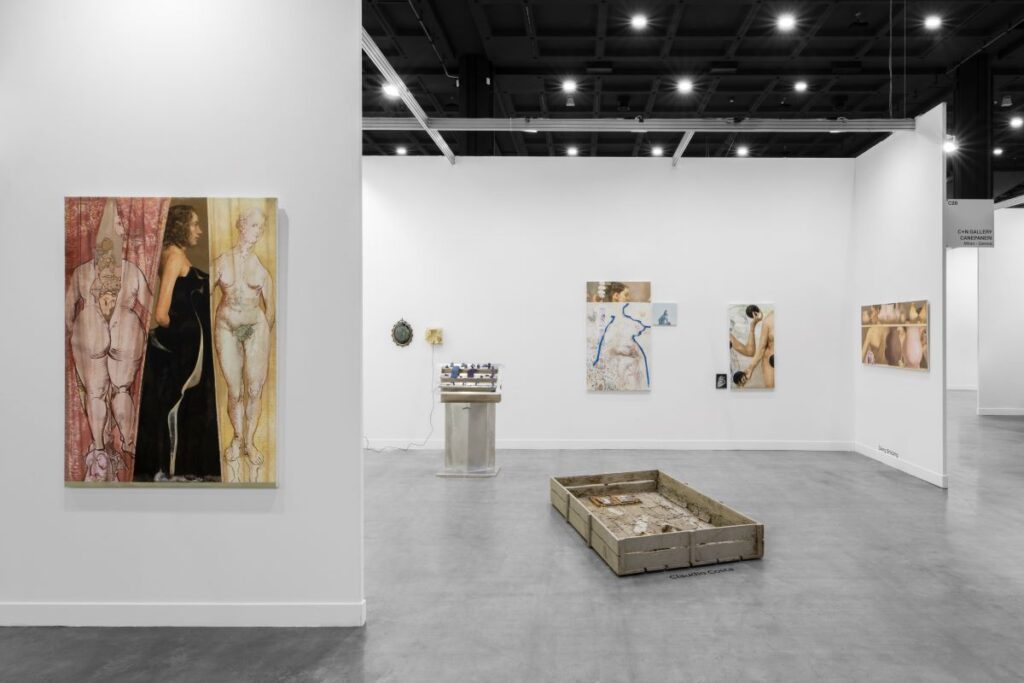
I encounter Shiqing’s research once again after first discovering it at Arte Fiera Bologna. Now, as then, I am struck by how her disciplined expertise unfolds across various stylistic registers within a single image—how the figure is decomposed or reproduced through the citation of other figures, often drawn from art history and observed by the main subject, or inhabited by graphic marks. A world within other worlds, where painting plays a narrative role of playful symbolic exploration. The three-dimensional and the flat converge in a mysterious seduction entrusted to shadow and surface, within the realm of the most ironic surrealism—bordering on the absurd—yet touching upon deeply concrete themes.
The themes addressed are often made explicit through the repeated presence of forms handed down as symbols: in paintings dealing with birth and surrogacy, the Egg makes its manifold entrance. Whether rendered realistically or suggested by a flat black field—even broken and dripping with a sometimes inconsistent substance no longer contained by the shell—it always seems to communicate with the female body. Both universally and pictorially, this body is associated with the expansion of the discourse toward the continuity of life. Featured on the exterior of the booth is Prelude of Birth, perhaps the work that most catalyzes a mysterious and questioning seduction.
Other artistic expressions caught my eye, but this seems to be the year of painting. Once again, I leave such a multifaceted event with a worldview renewed by the fascination of a brush soaked in color.
Michela Ongaretti